Complete SaaS engineering for subscription products — including the AI architecture layer where it earns its place.
Multi-tenant SaaS architecture and data separation, with tenant separation designed before the first customer, not retrofitted.
Authentication, roles, permissions and account management, for customers and for your own admin team.
Subscription and usage-based billing integration, including plans, credits and usage-based models, with the application hooks billing needs.
Customer dashboards and admin panels, planned as part of the product — not treated as afterthoughts.
Scalable APIs and a maintainable codebase for ongoing iteration.
AI architecture for SaaS: model and API integrations, retrieval and vector storage, agent workflows, and prompt and configuration management. Where the product uses subscription or usage-based billing, the billing design covers plans, credits or usage-based charges, with the application hooks billing needs.
Launch readiness: billing hooks, admin tooling, deployment patterns, and iteration support after launch, with monitoring where the agreed scope covers it.
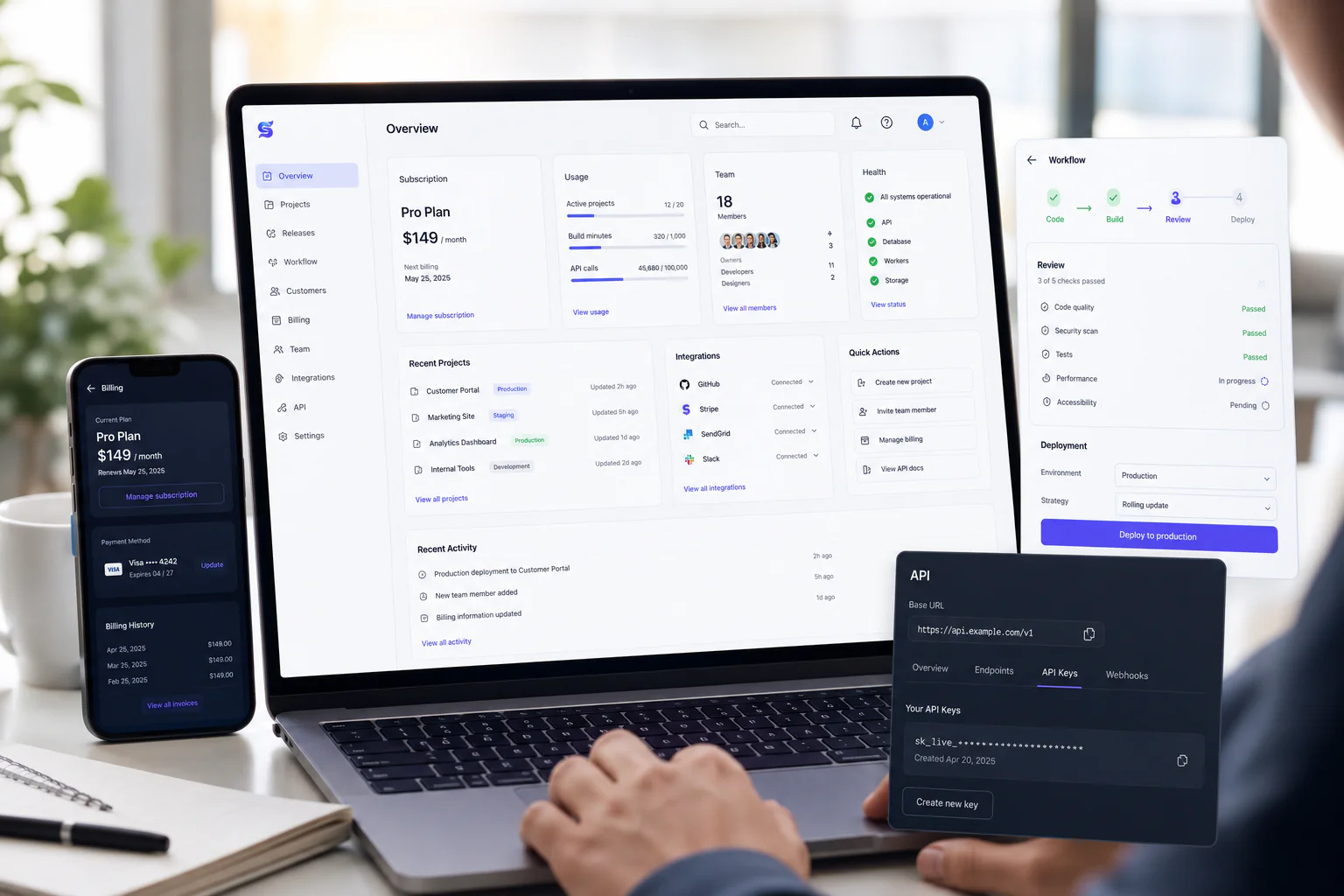
Core SaaS structure — accounts, permissions, onboarding, and the application layers customers use daily.
Services, data models and integrations that support growth, reporting and third-party connections.
AI inside the SaaS product — search, assistants, workflow features and agent workflows — designed with tenant separation in mind from the start. Feature design and build detail: see AI Development.
Iteration after launch: onboarding, usage flows, reporting and platform capabilities, improved as the product grows — scoped separately from new-feature work.
A SaaS-specific path from product definition through launch and separate iteration scope.
Product goals, customer types, account structure, tenancy model and the core workflows for the first release.
Tenancy, roles, data models, billing hooks, APIs, admin operations and the AI layer (where it applies) — before implementation.
Customer-facing screens, backend services, dashboards and admin tools, with maintainable delivery.
Permissions, workflows, billing-related flows, tenant separation and deployment readiness, checked before release.
Onboarding, usage flows, reporting and platform capabilities improved as usage grows, with new features scoped separately.
Early products not structured for recurring customers
Account, billing and permissions added too late
Backend architecture that becomes costly to extend
Onboarding and admin workflows treated as afterthoughts
Difficulty moving from MVP to a maintainable SaaS platform
AI features added without tenant separation or usage tracking, so costs and data become unmanageable
Clearer SaaS product foundations from the start
Architecture suited to subscription use cases
Better separation between customer and admin experiences
More maintainable APIs and data models
AI features that respect tenant boundaries and can be billed per use
Easier product iteration after launch
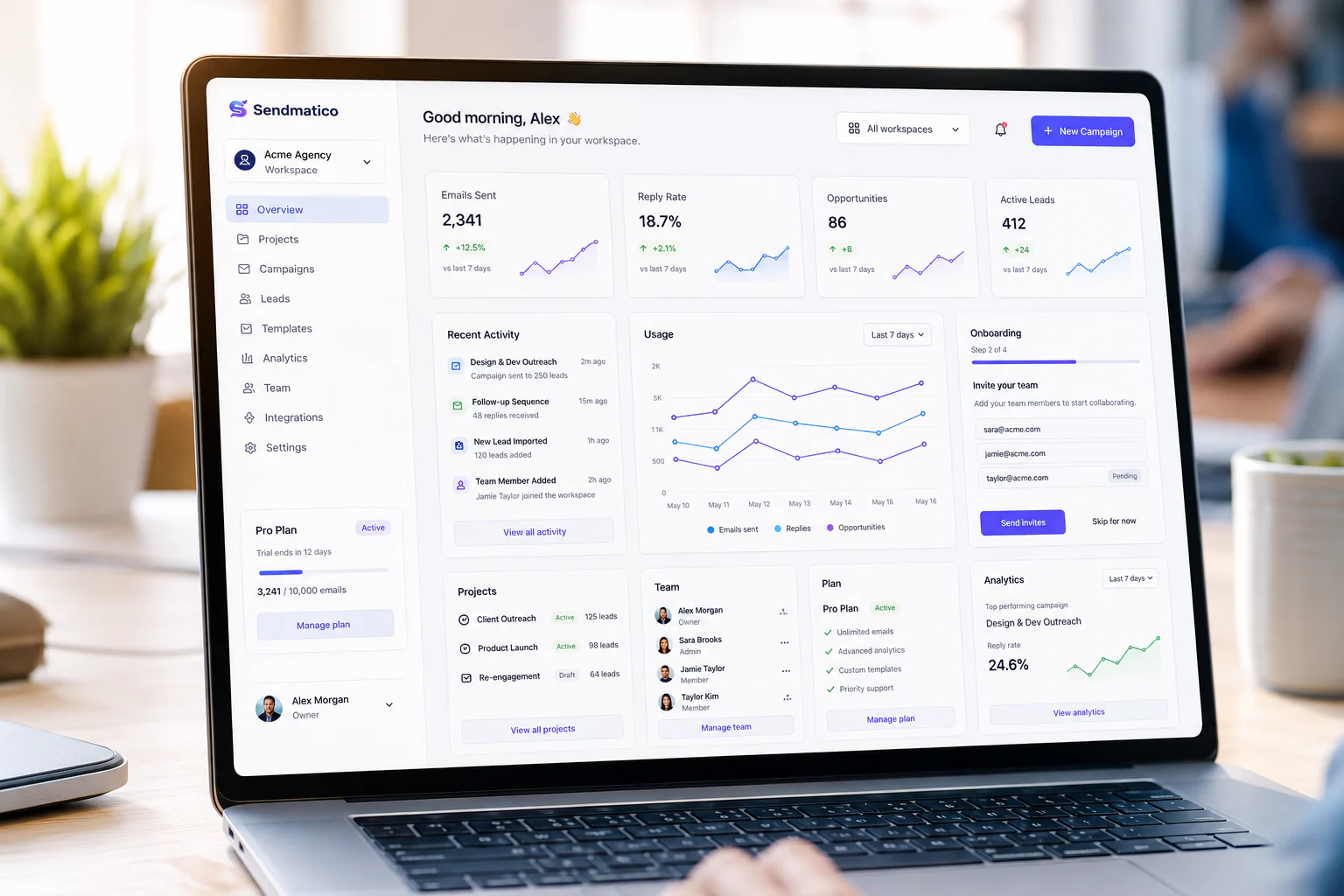
Sendmatico, our own SaaS product, demonstrates our subscription software engineering experience — the product, billing and operations work that goes into running software for recurring customers.
View SendmaticoExplore selected client projects connected to this service area.
In-depth case studies connected to saas development.
Building a SaaS MVP for a US or UK team? See our market pages for US startup software delivery and UK startup software delivery.
Practical answers about how iCodeLTD scopes, delivers, and supports software projects for startups and growing businesses.
Building or extending a subscription product? Tell us about tenancy, billing and the features your customers need — including AI where it earns its place.